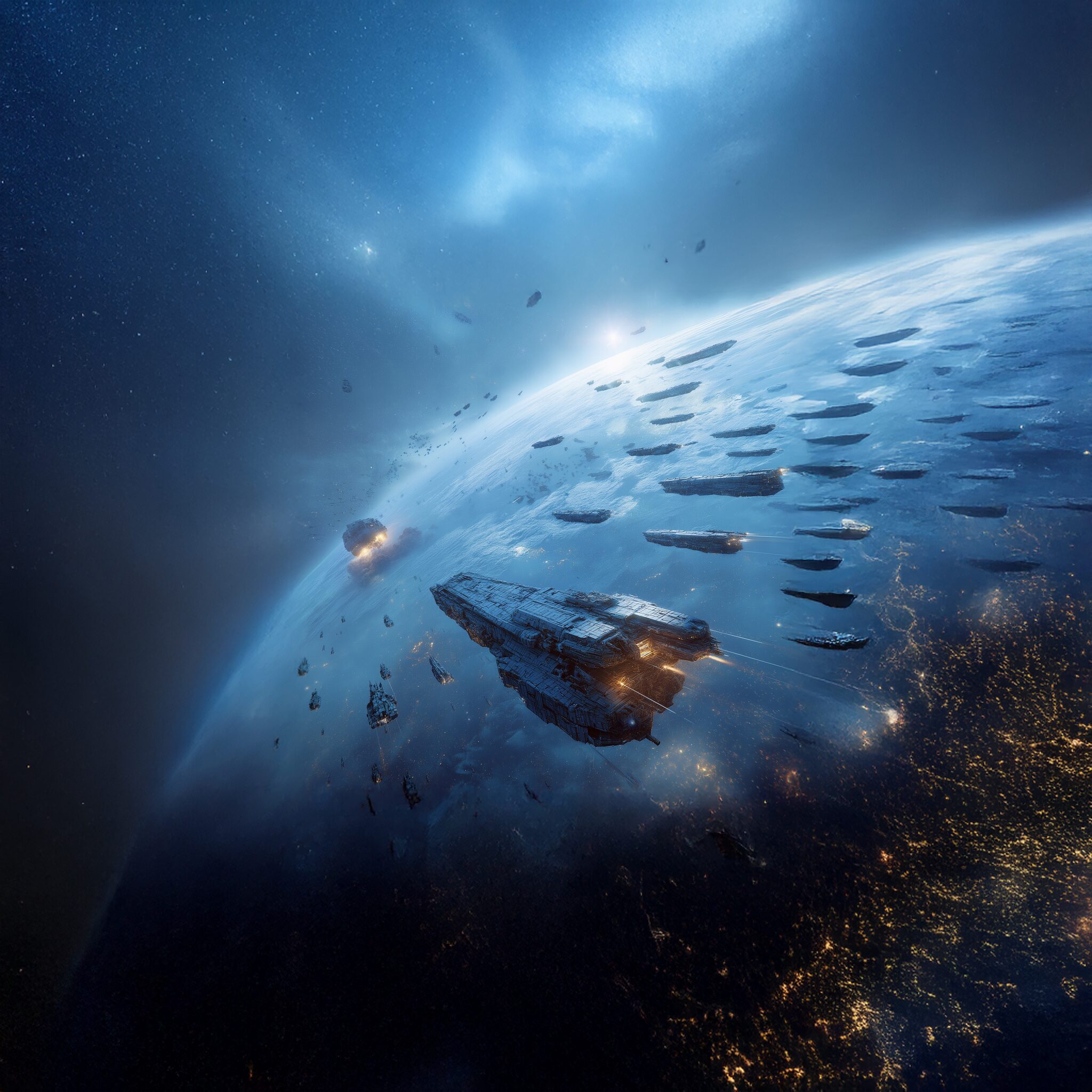

The Seekers are one of the three non-player races in SFC2, alongside the Krug and the Urcath. The other two are alive and hunting. The Seekers are not. The game calls them a ruler class that once stood over most of the known races and is now extinct, and what carries their name in the galaxy is what they left behind: derelict hulls and abandoned platforms still loaded with cargo nobody came back for.
That story makes no difference to how you fight them. They are an encounter race like the other two. You cannot talk to them, ally with them or be attacked by them. They drift into the galaxy, sit there for a few hours and wait to be shot at, and shooting them is one of the steadiest ways to earn resources in the game.
Finding them
Seekers turn up as encounters in the Galaxy view. They take up a slot the same way a planet does, but the row is shaded green and the Player column shows a name like "Seekers 8b89". Those four characters are a random tag. They are not a rank, a version or a difficulty score, and they mean nothing at all.

The colour of the name is how hard that particular fight is for you, not how big the Seeker is on its own:
- Grey - Trivial
- Blue - Easy
- Amber - Challenging
- Orange - Dangerous
- Red - Overwhelming
Blue, amber and orange also carry a number from 1 to 100 saying where inside that band the target sits. 1 is the soft end of the band and 100 is the hard end, so a blue 62 is a much heavier fight than a blue 6. Red carries no number, because a red target might be three times your size or three thousand times your size.
New encounters are placed every 15 minutes, and each one is sized against an active player near where it lands. That means the Seekers within reach of you grow as you grow. A solar system holds at most four encounters at a time. If you own a moon with an Oracle on it, you can scan whole blocks of systems for encounters instead of paging through the Galaxy view one system at a time.
Seeker encounter types
The bottom of the Seeker list is theirs alone. Where the Krug and the Urcath field enemy fleets and floating colonies, every small Seeker encounter is a wreck. Smallest first:
- Abandoned Cruiser
- Abandoned Warship
- Large Abandoned Warship
- Abandoned Leviathan
- Large Abandoned Leviathan
- Abandoned Colossus Platform
Above those the ladder keeps climbing, and every rung on it carries the Seeker name. These only start showing up once your Resources Spent is high enough to draw them:
- Seeker Dreadnought
- Seeker Behemoth
- Seeker Citadel
- Seeker Leviathan
- Seeker Worldbreaker
- Seeker Annihilator
- Seeker Eclipse
- Seeker Voidlord
- Seeker Titan
- Seeker Juggernaut
- Seeker Nemesis
- Seeker Cataclysm
- Seeker Ragnarok
- Seeker Apocalypse
- Seeker Oblivion
- Seeker Eternity
- Seeker Omega
- Seeker Zenith
- Seeker Sovereign
- Seeker Apotheosis
- Seeker Infinity
The Krug and the Urcath run that same upper ladder under their own names, but not at the same size. The Krug are the lightest of the three at every rung, the Urcath sit in the middle and the Seekers are the heaviest, so a Seeker Citadel is a heavier fight, and a bigger payout, than a Krug Citadel. Only the six wreck types at the bottom are unique to the Seekers.
You will never see the whole ladder at once. The game only offers you encounters near your own size, so the small rungs drop off the bottom as new ones open up at the top.
Armada variants
Roughly one in ten of the Seeker-named tiers spawns as an Armada instead, for example "Seeker Zenith Armada". An Armada is the same rung of the ladder, but it carries no ground defenses at all and puts its whole budget into ships. Ships leave debris and defenses do not, so an Armada leaves a much larger debris field behind when you break it. The six wreck types never roll an Armada.
How long they last
Every encounter is temporary. Small ones sit for about five hours. The biggest ones last close to a full day. They also vanish early once they have been looted down to about a quarter of the resources they started with, so a Seeker that two or three other people have already hit will disappear well before its clock runs out.
Scouting one
The eye icon on the row sends probes. The espionage report tells you exactly what is waiting: resources, fleet, defenses and combat tech. Seekers never have buildings, and they have no espionage tech of their own, so counterespionage against your probes is always 0 percent and they always come home.

Anything above the smallest wrecks also keeps a screen of Anti-Ballistic Missiles in with its defenses, so a missile strike has to burn through interceptors before it touches anything else.
Attacking one
The lightning icon launches the attack. The fight itself runs on the same combat rules as a fight against a player, but there are a handful of differences worth knowing:
- None of the size protections apply. Newbie protection and the rank ratio both ignore encounters, so any player can attack any Seeker they can reach.
- The bashing limit does not apply either. You can hit the same encounter as many times as you like until it is empty.
- PVE Mode does not stop you. Seekers are not players, so a PVE Mode account can farm them normally.
- Diplomacy mode does stop you. While you are in diplomacy mode you cannot launch any attack at all, encounters included.
- Plunder is capped at half of what is sitting on the target, the same as a normal raid, so bring cargo.
- Ships destroyed on both sides leave a harvestable debris field. Defenses do not.
- Destroyed Ship Points earned off an NPC count at half rate towards your ranking.
- A Seeker can never give you a moon, no matter how big the debris field is.

Secret missions
Seekers also show up in secret missions, which draw from the same set of encounters, Seeker-named tiers included. Those ones sit in a galaxy only you can reach, so nobody else can pick them clean before you get there.
Comments
No comments yet.
Sign in to leave a comment.