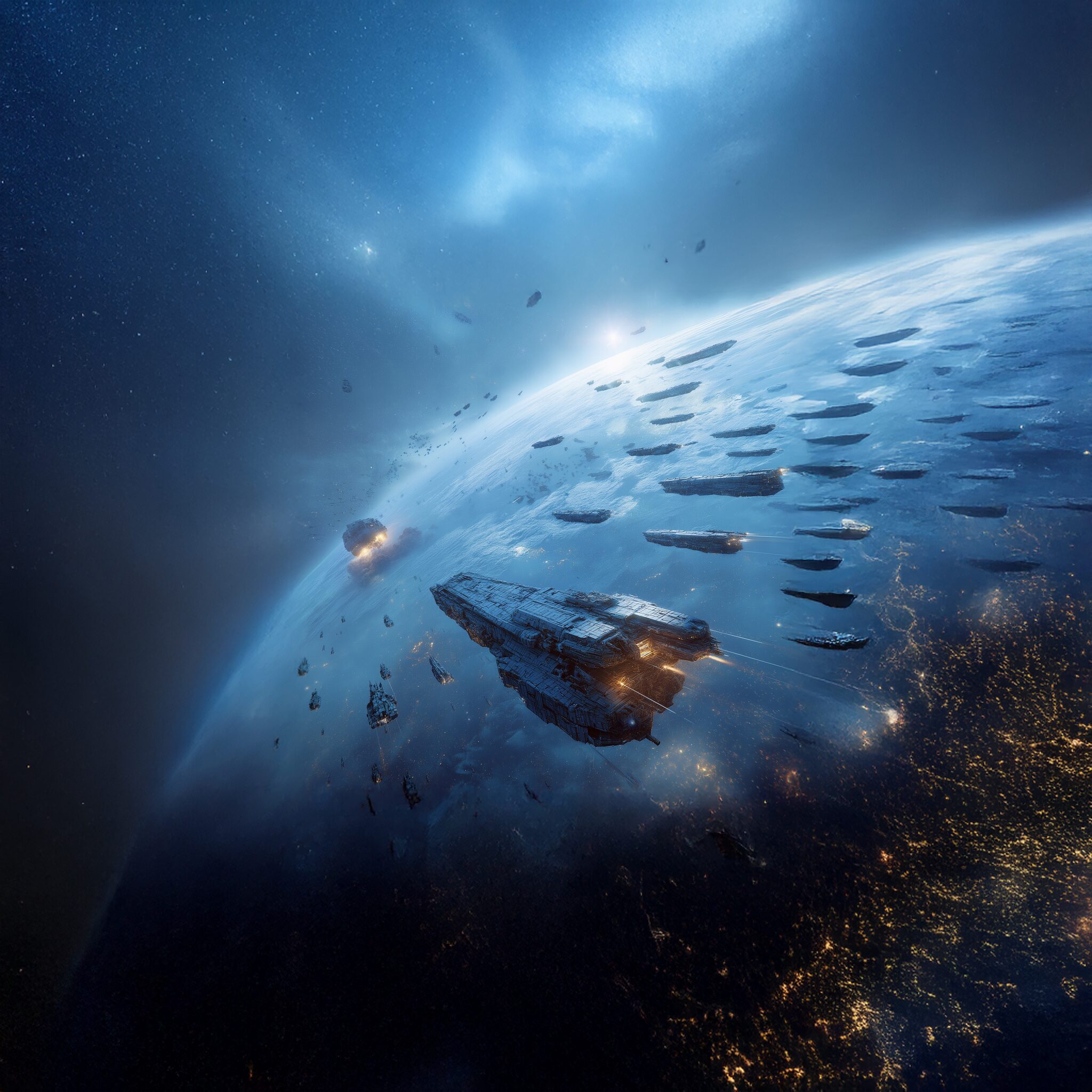
A group attack is several fleets hitting the same planet in one battle. In SFC2 every attack is a formation from the moment it launches, so a normal solo attack is really a formation with one fleet in it, and you can bring other players into it while it is still flying.

Starting one
Launch a normal attack from the Galaxy page or from Fleet Dispatch on the Fleets page. Nothing extra to tick. As soon as the fleet is away it shows up with a Formation button next to it, and any fleets that join later get listed underneath it.
Inviting people
Formation opens the Attack Formation window. It lists everyone who is in, what they are bringing, how many slots are left and when the group lands.

Only the player who started the attack gets the Send Invites panel. It lists your buddies and your alliance members, tagged Buddy, Alliance or Both. Tick the ones you want, add a personal note if you like (500 characters) and hit Send Invites. Anyone who has switched off incoming messages is skipped, and the game tells you who.
The invite arrives in their Messages as an ordinary message with a link in it.

The link is what actually lets someone in, not the buddy list. If you paste it into alliance chat or a forum post, anyone who can read it can use it. Do not put it anywhere the target might see it.
Joining
The link opens the Join Attack page. It shows where the group is going, how many fleets are in it and how long until it lands, then the usual ship picker for whichever planet you have selected at the top.

Pick your ships, pick a speed, hit Join Attack. If you are already in the formation, the Attack Formation window also has a Join from button so you can add a second fleet from another one of your planets.
What to know before you commit:
- Seven fleets maximum. The player who started it holds one slot, so six more can join. A fleet that withdraws frees its slot again.
- Each fleet ties up one of your fleet slots until it gets home, and burns hydrogen from the planet it leaves.
- Joining spends one of your six attacks on that planet in 24 hours. See bashing. Withdrawing gives it back.
- You have to be able to attack the target on your own. Newbie protection, rank range, vacation mode, PVE Mode and diplomacy mode are all checked against you personally when you join. If you cannot hit that player alone, you cannot join a group that is hitting them.
- You cannot join an attack on your own planet, so there is no point inviting the owner of the target.
- One player can put in several fleets from different planets. Each one takes a slot and each one counts separately against the bashing limit.
Timing and the 30 percent rule
The whole group lands at the same moment, and that moment is set by the slowest fleet in it. If somebody joins with a fleet that cannot get there in time, everyone waits for them.
That waiting is capped. The budget is 30 percent of the flight time the attack had when it launched, and it is a total across every join, not 30 percent each.
Say the attack needed 100 minutes to reach the target when it went out. The group can be held up by 30 minutes in total. Fifty minutes in, with 50 minutes left on the clock, a fleet that needs 65 minutes to get there lands 15 minutes late and eats 15 minutes of the budget. One more slow fleet can eat the other 15. After that any fleet that would push the landing back at all is turned away with "Your fleet is too slow to join this attack group (exceeds 30% slowdown budget)."
The budget is measured against the original flight time, not against the time left on the clock. A long attack has a big cushion. A short hop inside one solar system has almost none, so anyone joining that has to be quick and close.
Fleets that would arrive early are never a problem. They hold and land with everyone else.
Pulling out
Every fleet in the formation has its own Withdraw button, and it only ever moves that one fleet. Nobody can recall anybody else's ships.
A fleet that withdraws turns round on the spot and takes no longer to get home than it has already spent flying, so backing out early is cheap. The rest of the group carries on. If the player who started it withdraws, the attack still happens with whoever is left. It is only called off when the last fleet leaves.
Any delay the group has already picked up stays picked up. Pulling the slow fleet out does not move the landing time back in.
What the target sees
The defender sees a group attack coming from the moment it launches, in red on their Overview and Fleets pages, with the number of fleets in it.

How much more they get depends on their own Espionage Tech:
- Level 2 and up: the total ship count, and where each fleet is flying from.
- Level 4 and up: which ship types each fleet is bringing.
- Level 8 and up: exact numbers of each type.
The Oracle will not show you a fleet in flight. It is a target finder and it only reports what is sitting on planets.
The battle
All the attacking fleets are merged into one force and fight a single battle. Combat then works exactly as it does for one attacker.
The whole attacking side fights on the best Weapons, Shield and Armor Tech level in the group. Your ships are not stuck with your own research, so bringing one high tech player along lifts everybody's ships in that fight. The defending side works the same way: the planet owner and any Group Defend fleets sitting there all fight on the best levels present.
Losses come off the combined force and are then handed back to the fleets in proportion to how much of that ship type each one brought. If two players both sent 50 Athenas and 40 die, they lose 20 each.
The debris field and the moon roll happen as normal. Everyone in the battle, attackers and defenders, gets the same Group Battle Report in Messages.
If the target has no owner by the time the group arrives, or the planet has moved, the whole group bounces and flies home without a fight.
The split

Plunder is split by surviving cargo space. Every ship that can carry loot counts its hold, the holds are added up, and each fleet takes its share of the total. Probes and the Hephaestus carry nothing and count for nothing. Ships you lose in the battle do not count either, so a fleet that gets shredded brings home less than it looked like it would.
That means haulers decide the split, not firepower. In a four fleet group that took 2.9 million resources off a planet, the two players who brought Hercules came home with about 705,000 and 414,000 ore, while the player who turned up with 55 Prometheus destroyers and no cargo ships got 44,000.
The plunder cap itself is the usual 50 percent of what is on the planet, or 55 percent when every fleet in the group is at war with the defender's alliance and no outsiders turn up to defend.
Destroyed Ships Points are split by the value of the fleet each player put in, not equally. Send a tenth of the group's ships and you get roughly a tenth of the DSP.
A player who ends up on both sides of the same battle, attacking a planet they are also group defending, earns nothing from it. Their share goes to everyone else.
The Group Battle Report shows the totals for the whole group. Your own cut of the loot turns up on your Attack Return report when your fleet gets home.
Group Defend
The defensive version of all this is Group Defend, where several players park fleets on one planet to meet whatever is coming.
Ships sitting on a Group Defend fight everything that lands there, including a group attack that their own owner, alliance or buddies are part of. It is the one way in the game to shoot at your own ships.
Comments
No comments yet.
Sign in to leave a comment.